: Practice & Theory Stack Exchange is a question and answer site for ians, students, and enthusiasts. It only takes a minute to sign up.
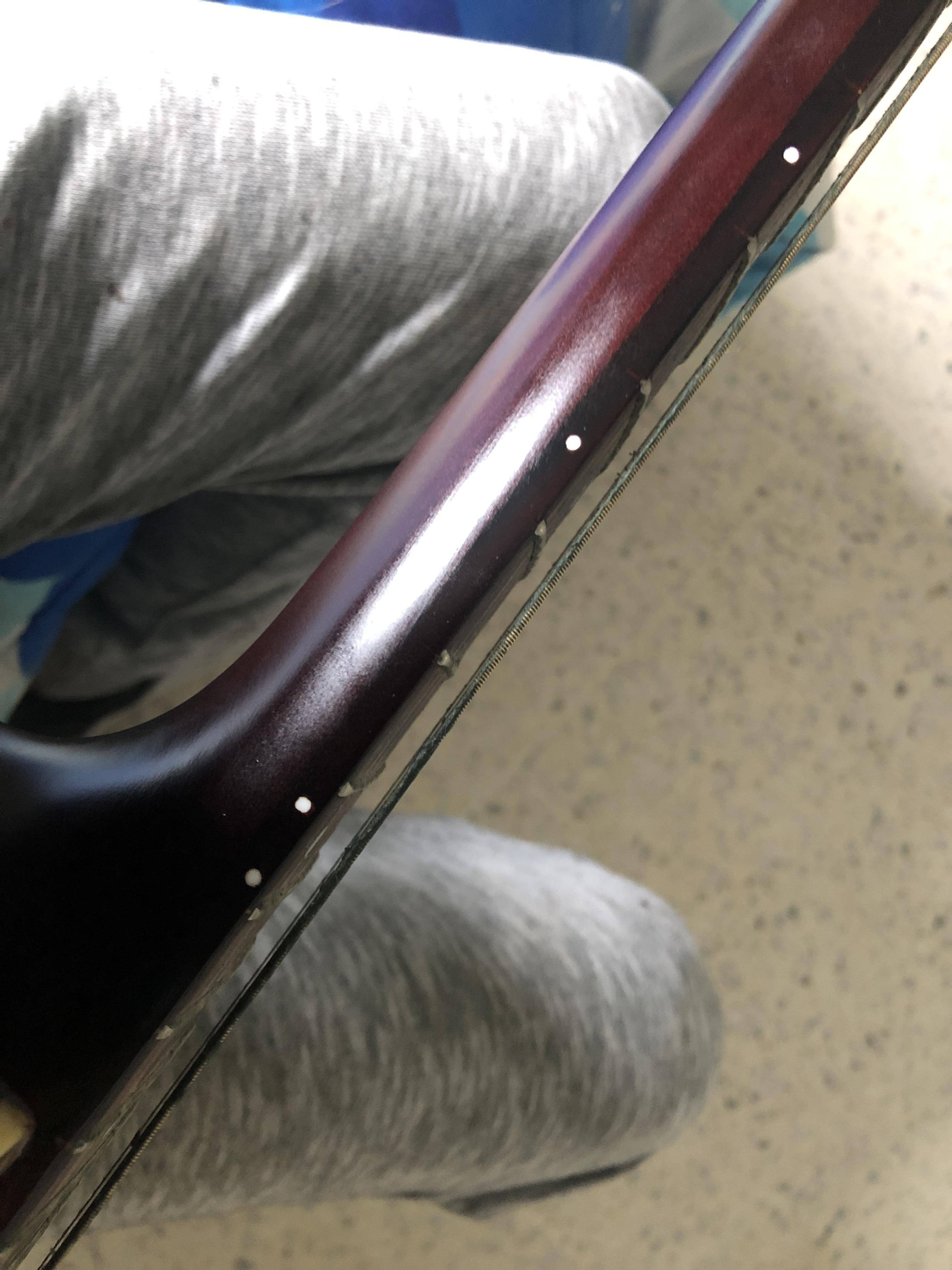
I'd like to see another pic of more of the neck, because that is starting out at one heck of an angle; so either the neck is bent way out of true, or the action at the 12th fret is about half an inch:
Quick snap of one of my 6-strings & the bass it just happened to be leaning against, showing a much 'flatter' slope to the action as it progresses up the neck.
My Guitar Action Is Too High. I Just Bought This Yesterday Off Amazon And My Fingers Hurt Really Bad Lol (i Already Play An Electric Guitar But Am New To An Acoustic)
Be the neck relief [ie, the amount of curve it has in it] or it could be the overall action at the bridge is set too high... or indeed a little of both.
The neck may be bent. All guitar necks have a slight bend in them - it's called relief - to stop the strings buzzing on any frets. But too much relief will give your symptoms, and is remedied in part by tightening the trussrod. Not recommended to be done by the inexperienced.
The action may simply be high due to the saddles/bridge being too high. On a lot of guitars, the bridge has a couple of adjusting screws that lower and raise the whole bridge. Others have individual saddles which are adjustable for each string's height. Some have a bridge that cannot be altered except by shaving some off it.
Ways To Keep Your Guitar In Tune
Without a view of the whole of the neck, it's difficult to say more, but lower guage strings often help, as they are not under so much tension, thus being easier to fret. Last resort would be deepen the nut slots, but not particularly recommended.
There's a lot of discussion on this, and a good luthier can set up your guitar to play as comfortable as possible. There are three ways to lower the action, although the guitar gurus will tell you never to adjust action by adjusting the truss rod. The other two ways are by adjusting the depth of the nut slots, and adjusting the string saddles at the bridge. You need to deal with all three of these adjustments to get the right mix. I like very little relief, almost flat in fact, so I turn the truss rod counterclockwise and press down the G string on the first fret and the last fret and see how much string clearance there is at the 12th fret. I then adjust the bridge saddles as low as they will go with out buzzing or fretting out (where the string hits the next fret and goes dead). Then I cut the nut slots with nut files (or sandpaper on a feelers gauge) to as low as you can go without fret buzz. Actually the nut slot adjustment is the most important, especially for playing chords near the nut. It's a tricky practice, that's why so many guitarists pay their luthiers to do what is called a setup, which is basically what I just explained.
Only you can determine if the string action is too high. Lowering the action can give problems with string buzz, and especially if you are striking the strings hard. But give it a go to lower the action. The guitar gets easier to play with lower action.
Beginner Here, Would You Say My Action Is Too High? The Top Fret Is Fret 6
Another thing you could try is to just change to thinner strings. Thicker strings gives more tuning stability and a slightly heavier sound, but they also makes it harder to play.
But yeah, from the picture I'd say that the action is VERY high. You probably should make the groves in the nut deeper.
That height is definitely not a nut issue, the nut looks low enough. Have you had anyone help you set the neck bow? How is your bridge height? You could try adjusting the neck first and then the bridge height second. Another option, not sure what gauage strings you are using but you could try a lighter set. I know at least one string maker ( i think ernie ball) makes a set with lighter bass strings and heavier small strings. I liked the sound and feel of that set. They are a lot easier on your fingers.
Is My Bridge Too High? Also Tuning Problems.
Or like some of us have done, suck it up and keep playing until your fingers build enough callous that you don't feel anything anymore :P
By clicking “Accept all cookies”, you agree Stack Exchange can store cookies on your device and disclose information in accordance with our Cookie Policy.Guitar action is important to understand and know how to adjust. If you want your guitar to be as comfortable as possible to play, read through this guide to learn how to properly adjust your guitar’s action.
In this guide, you will learn what guitar action is, why it is important, how to measure it, and how to adjust it for acoustic or electric guitars.
Why Does My Guitar's High Notes Sound Shrill And Uncomfortable When I Play With Distortion?
Guitar action also plays an important part in your guitar’s intonation. Find out about intonation and how to adjust it in this guide.
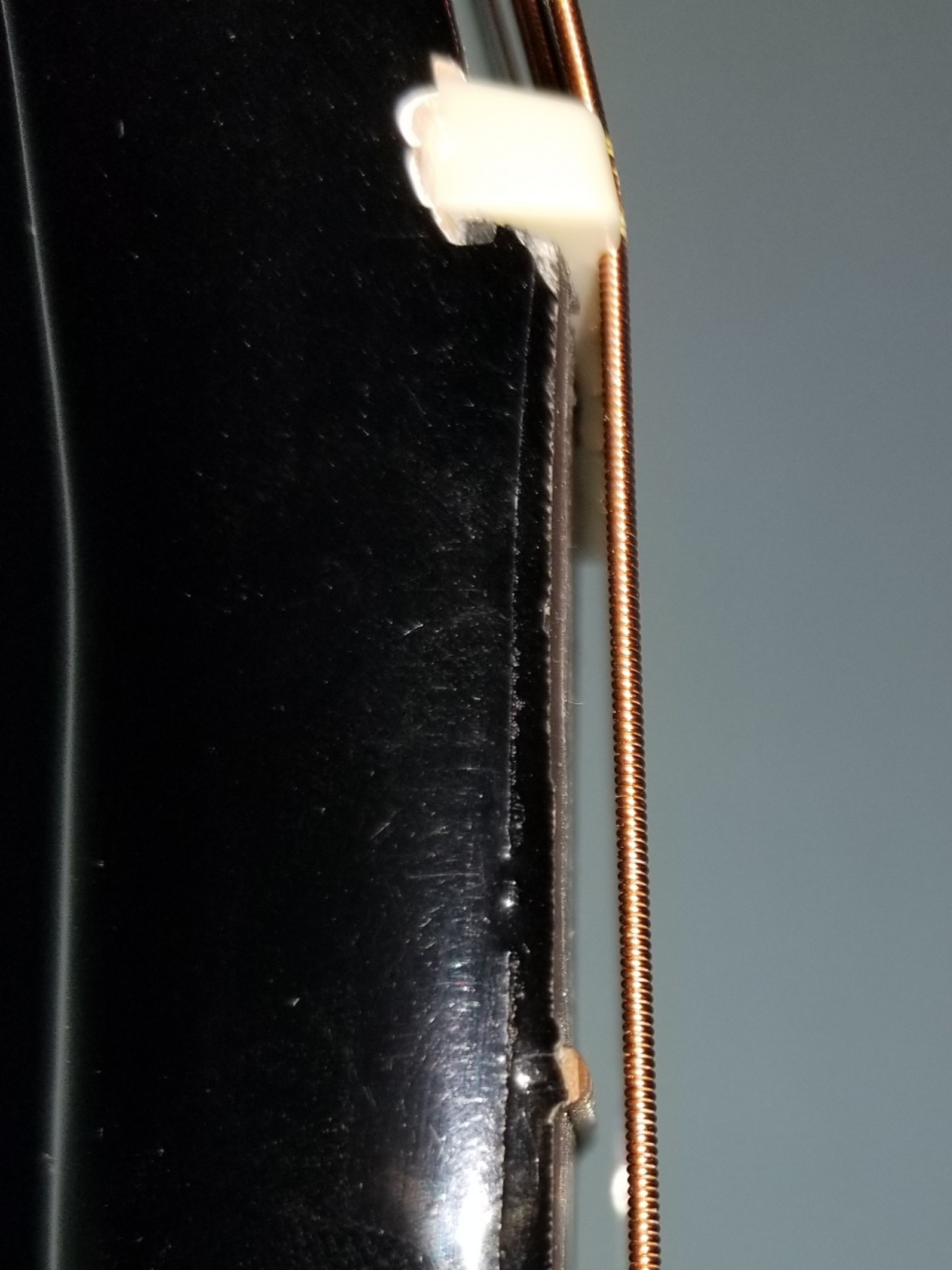
Guitar action or guitar action height is the height of the guitar strings over the fretboard. Guitar action plays a big role in how a guitar feels to play.
If the action is too high, the guitar will feel uncomfortable to play. If the action is too low, you will hear string buzzing.
Amazon.com: Donner Hush I Guitar For Travel
If your guitar’s action is too high, your fingers need to push the strings down really far before they come into contact with the strings. This can make it awkward to play and slows you down.
Before we look at how to adjust action, let’s look at how to properly measure it and what your action should be set to.
This Ultimate Guide on Truss Rods explains how to check if your truss rod is set properly and how to adjust it for the best results. Read the guide to learn everything you would want to know about truss rods.
Electric Guitar String Gauges Explained
Once your guitar’s truss rod is set up properly, you can then measure your action height and make adjustments. But make sure your truss rod is first set properly.
You measure guitar action height with an action gauge or ruler. Rest the end of the ruler against the 12th fret on your guitar and hold it against the string. You need to measure the distance between the top of the fret and the bottom of the guitar string.

A ruler that starts the measurements from the very end allows you to press the ruler flush against the frets and get an accurate measurement.
How To Restring An Electric Guitar
A guitar action gauge is a custom ruler designed for measuring action on the guitar. They’re easy to use and give clear readings in inches or millimeters.
The FretGuru 2 action gauge shown below is more expensive than the above version but also measures fret height, fret wear and nut height.
Note for step 2: if you’re unsure whether your neck is straight or you need to adjust your truss rod, read this Ultimate Guide to Truss Rods. Properly setting up your truss rod is crucial to get right before you adjust your guitar’s action.
How To Adjust Guitar Pickup Height
In the above photo, you can see that an action gauge makes it pretty easy to measure action thanks to the separate blocks. Simply move the gauge left or right until one of the readings matches the height of the bottom of the string. If you use a standard ruler, take multiple measurements to make sure you read the ruler properly.
Whether you need to measure all strings on your guitar or just the high and low E strings depends on the type of bridge your guitar uses.
If your guitar’s bridge doesn’t allow you to adjust the height for each string, you only need to measure the action on the high and low E strings.

Guitar Action Too High
Later in this guide, we will look at different types of bridges so you can figure out whether you need to measure all of your guitar’s strings or not.
Low action isn’t a problem if you have a light playing style. If you are soft when picking the strings, the strings aren’t likely to buzz against the frets.
Imagine a jazz guitarist playing some fast and soft passages with gentle picking and a soft touch on the strings. Low action will probably suit the guitarist as it will make the guitar feel easier to play.
Got Guitar String Buzz? Here Are 8 Things You Might Be Doing To Cause It
If you have an aggressive playing style, you may find that low action causes a lot of fret buzz. Raising the action can remove the buzzing and clean up your playing.
Imagine a hard rock guitarist bashing some power chords on stage. The aggressive playing style causes the strings to vibrate wide and low action would cause serious buzzing issues. This guitarist would likely prefer a higher action so he can hit the strings as hard as he wants without the notes fretting out.
Most guitarists tend to prefer lower action compared to a higher action. You will likely want the action height to be as low as possible without creating any buzzing.
Shaving An Acoustic Guitar Bridge — Haze Guitars
Electric guitars can achieve lower action than acoustic guitars. If you play an acoustic guitar and then pick

0 Response to "Strings Too High On Electric Guitar"
Posting Komentar